
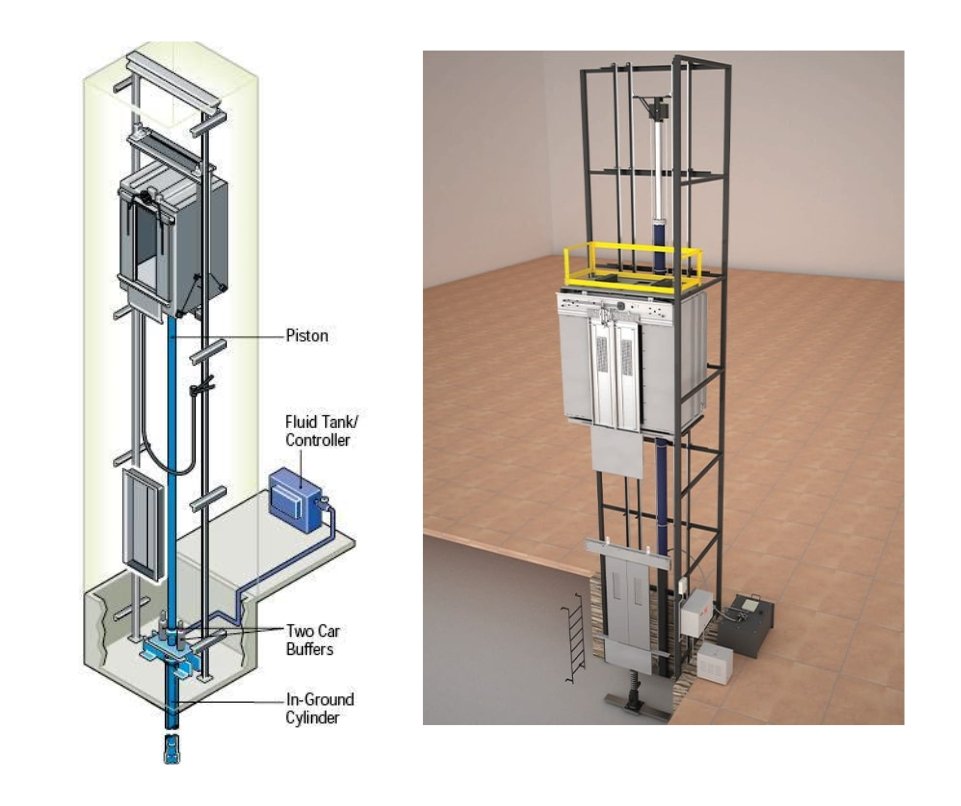

Hydraulic Elevator
A hydraulic elevator is a type of lift that uses a hydraulic pump and a fluid-driven piston (ram) to raise and lower the elevator car. It is commonly used in low-rise buildings, home elevators, and small commercial applications.
How the Hydraulic System Works
Upward Movement
- An electric motor powers a hydraulic pump.
- Oil is pumped from the reservoir into the cylinder.
- Pressure builds, pushing the piston (ram) upward.
- The piston lifts the elevator car.
Downward Movement
- The pump stops.
- A valve opens to release oil back to the tank.
- Gravity pulls the car down smoothly by controlling oil flow.
Downward travel requires no electricity (only valve control), making hydraulic elevators highly energy-efficient when descending.
Advantages of Hydraulic Elevators
- Low cost compared to traction lifts
- Simple design and easy installation
- No overhead machine room required
- Best for low-rise buildings (2–6 floors)
- Extremely smooth and comfortable ride
- Ideal for goods lifts & car lifts – high load capacity
- Energy efficient – uses power only when moving upward
- Pit depth: 150–1200 mm
- Overhead: 3000–4000 mm
Common Uses
- Homes and villas
- Small commercial buildings
- Hospitals (stretcher lifts)
- Goods lifts / freight elevators
- Car elevators
- Shopping centers (low-rise)